
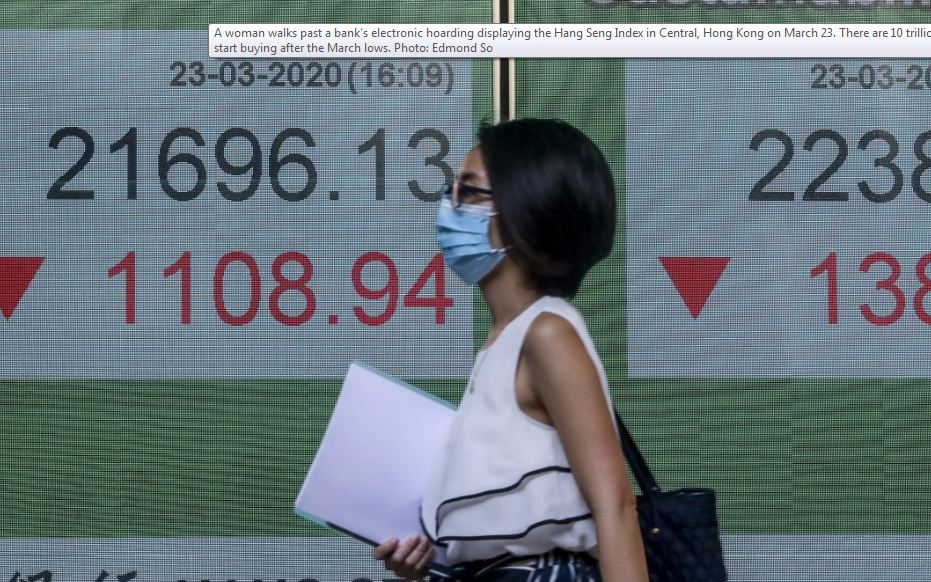
- Even with the market gyrations in the short term, investors could look further ahead to pick out bargains
- Hong Kong, with huge reserves and a strong currency, is set to weather the storm. Yet, the government favours politics over economics, inhibiting recovery
It may look as if things are back to normal – but they won’t be; we will be living in a very different economic world, having lost a lot of absolute growth.
That logic is why investors are “looking across the valley”. The big falls in March took US market indices back three years and other markets back seven to 10 years. Prices have recovered strongly since, on the back of the big bazookas fired by authorities around the world that have pledged to put as much as US$10 trillion – according to a Bloomberg report – into the global markets.
By way of reference, the market size of the MSCI World Index of 49 markets is about US$35 trillion – and that’s where, together with real estate, a lot of this extra liquidity is going to go.
In the short term, the market has to come to terms with the massive damage done to companies, people and economies. Big brand names are already going bust – most are already likely candidates for the chop but some will be unexpected. That is likely to inspire a further collapse in share prices.
But don’t waste a good crisis. In the longer term, this will be the time to look for bargains in future-facing companies. There are 10 trillion reasons we could well get buying before the March lows are touched – unless there is a shocking event, like one of the global banks going down.
Technology stocks are an obvious beneficiary of new investment as we become more digital. Government and corporate investment in pharmaceutical research previously reserved for cancer, heart attacks and the HIV epidemic will be put into viral infections, previously thought to be little more than an irritant.
The global economy can’t allow a shutdown, with a third of the world’s population stuck in purdah, to happen again.
Having a little gold in your back pocket should be a hedge against inflation when money loses value as more of it is printed. Oil stocks may rise from here; surely it has to go up.
The irony of ironies is that Hong Kong is in an excellent financial position to weather the storm, with a mountain of cash going into the crisis and a strong currency (perhaps they are related). It is likely to be one of very few major currency jurisdictions not printing funny money to pay its bills.
Any economy would want to be in our position. Yet, the central and Hong Kong governments seem to have chosen to take advantage of the crisis to favour politics ahead of economics, surely driving a deeper wedge within society and inhibiting our recovery. So even we will be unable to take advantage of good economic management.